
Strategy Canvas

Achieve a Sustainable Competitive Advantage

When developing their go-to-market strategies, many firms tend to take a product-oriented focus. They think of the product as a set of features and benefits, and then look for technical and business needs that can be matched by those features.  The most successful companies, however, define their strategy from a customer focus.

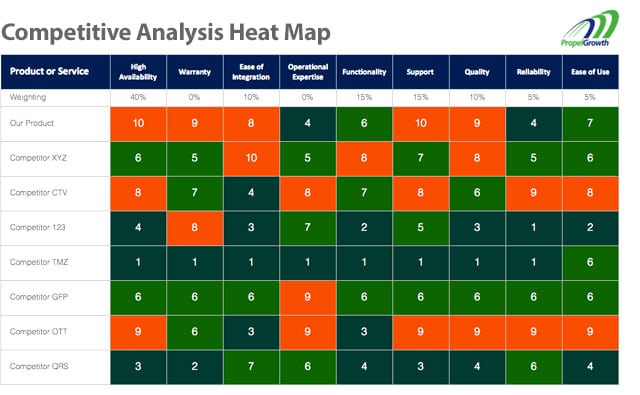
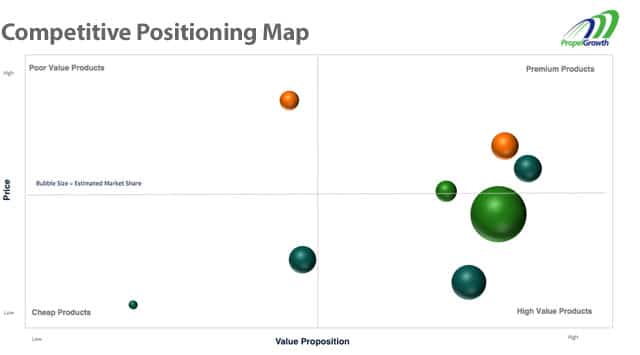
The development of a customized strategy canvas will give your company a clearer picture of your target market as defined in your opportunity maps, the targets’ business needs associated with your capabilities, how those needs are being filled by current products/services, and the gaps in the current offerings. It will also give you a view of how your customers perceive your products and their relative strengths and shortcomings; identify the real competition and how your offerings stack up against them; demonstrate areas of strength and weakness; and define ways in which your customers would like to use your capabilities going forward.

From this information, you’ll be better able to more effectively position your offerings and determine market-driven sales, marketing, and product development strategies. This will enable your company to better concentrate its resources on the greatest opportunities to increase sales and achieve a sustainable competitive advantage.

PropelGrowth will conduct primary research with your customers, prospects, and respected industry resources to prepare a tailored strategy canvas for your firm, which takes the following information into consideration:

  • Customer perception of your firm’s capabilities: How do they currently use your technology? What business problems does your technology solve? How does the use of your capabilities break down by user type? What are the key values they obtain?
  • Competitive trends: What part of the market do you share with the competition? What areas are underserved by the competition? What areas are well-served by the competition? What areas are already commoditized and which represent opportunities for commoditization?
  • Untapped innovation: Are your customers using or considering using capabilities in a way you’ve yet to consider? How can you expand your technology based on that information? Where can you add features and capabilities that will increase usage?
  • Peripheral market opportunities: Where can you expand your business to create new opportunities in new and existing markets?